News
What makes Aluminium Sachet Packaging & High Barrier Film special
2026-09-17
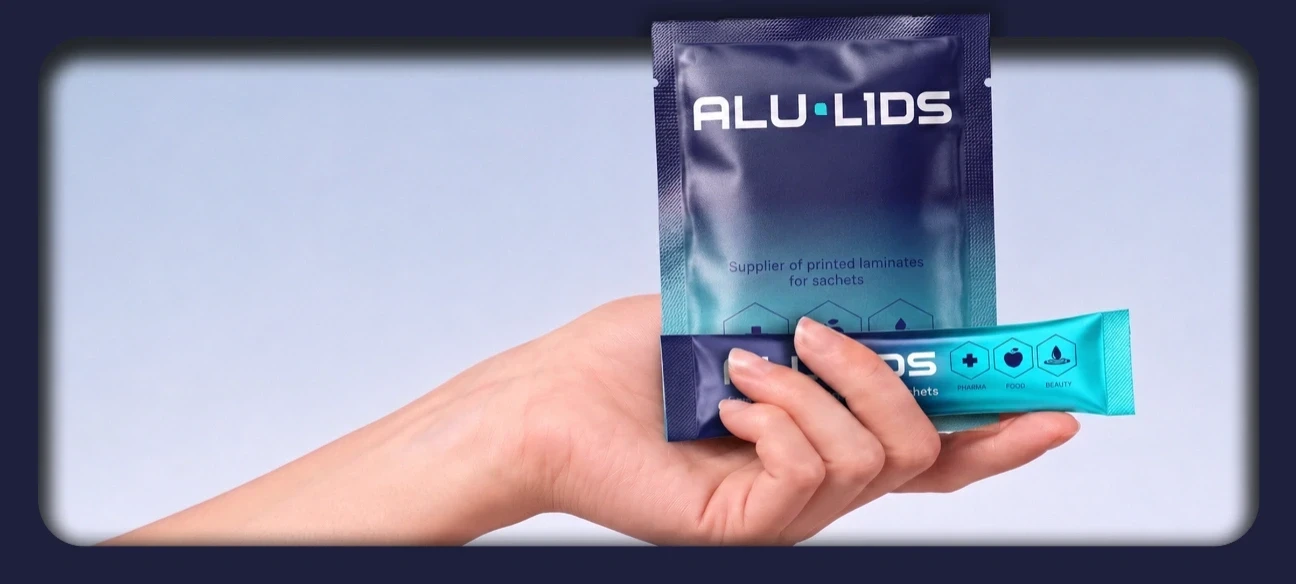
Why do high-quality products deteriorate inside seemingly well-sealed packaging?
A customer reports a problem: an effervescent powder has clumped, a vitamin C serum has changed colour before opening, or coffee in a sachet has lost its aroma. The packaging looks flawless — the seals are intact, and the film shows no visible damage. The issue lies not in manufacturing quality, but in the choice of barrier structure.
Standard laminates: effective, but not for every application
Conventional sachet laminates made entirely from plastic layers are widely used in pharmaceutical, cosmetic and food packaging. The sealant layer provides flexibility, cost efficiency and reliable sealing, while the outer substrate delivers mechanical strength and a suitable surface for printing. For everyday products such as shampoo samples, this level of protection is generally sufficient.
The limitations become apparent when a product needs greater protection. These structures can effectively limit moisture transmission, but offer considerably less protection against oxygen, UV radiation and the loss of volatile aroma compounds. As an indication, oxygen transmission rates (OTR) for laminates without a dedicated barrier layer range from a few to around a dozen cm³/ m²/24 h, whereas a well-made aluminium foil laminate can achieve values close to zero. Invisible to the naked eye, this difference can determine how well a product holds up over time.
In practice, this can mean:
- Pharmaceuticals — moisture passing through the polymer layer causes effervescent powders and oral rehydration salts to
clump. - Cosmetics — active ingredients such as vitamin C and retinol oxidise, losing potency and changing colour before the consumer
even opens the packaging. - Food — fats in products such as mayonnaise turn rancid, while moisture causes premium coffee to clump.
MPET: a compromise that can cost more than it saves
For procurement teams looking for better barrier performance, metallised PET (MPET) is a natural option. It is less expensive than aluminium foil, and its metallic sheen also appeals to marketing teams.
However, MPET has an inherent structural limitation: its metal coating is only tens of nanometres thick. By comparison, the aluminium foil typically used in laminates is 7–12 micrometres thick — hundreds of times thicker. Bending or compressing the packaging can create microscopic cracks in this thin coating, and even minor damage can sharply increase oxygen transmission. Flex-resistance studies have also reported increases of several hundred per cent in water vapour transmission after just a few flexing cycles.
As the barrier deteriorates, oxygen and moisture can enter the pack, shortening the product’s shelf life. The consequences can range
from ruined batches of sensitive pharmaceutical powders to the degradation of expensive chemical peel formulations.
Aluminium foil: stronger barrier performance, with limits of its own
A properly designed aluminium foil laminate — typically PET/Alu/PE, with polymer layers protecting the foil on both the outside and the product-contact side — addresses this vulnerability by providing a virtually complete barrier to oxygen and moisture.
That does not mean aluminium foil is immune to microscopic damage. The surrounding polymer layers cushion the foil and reduce the stresses acting on it. Under the mechanical loads typically encountered during production, transport and distribution, this helps an aluminium foil laminate retain a substantial barrier advantage over even undamaged MPET.
Under severe, repeated flexing, however — on the order of hundreds of cycles — aluminium foil can fracture abruptly, causing a sudden loss of barrier performance. This differs from the more gradual deterioration of MPET. Choosing the right laminate structure and validating it against the intended packing and distribution conditions is therefore just as important as selecting the barrier material itself.
For pharmaceutical applications, another consideration is compliance with ISO 15378:2017, which covers primary packaging materials for medicinal products and incorporates Good Manufacturing Practice (GMP) requirements. The structures developed by Alu-Lids are manufactured under this certification.
What about recycling?
Procurement teams are asking this question more frequently as they prepare for the requirements of the Packaging and Packaging Waste Regulation (PPWR). The honest answer is that aluminium foil laminates, as multi-material structures, are more difficult to recycle than mono-material alternatives.
For products whose safety or active ingredient stability depends on barrier protection — including effervescent powders and cosmetics containing sensitive actives — balancing product shelf life with recyclability remains a real challenge for the packaging industry. It deserves careful consideration when the structure is first designed, rather than being left until an audit raises the question.
When should you consider switching to an aluminium foil laminate?
We recommend reviewing the options when any of the following applies:
- The product contains ingredients sensitive to oxygen or light.
- The declared shelf life is 12 months or longer, with exposure to varying humidity levels.
- Complaints about clumping, colour changes or loss of aroma keep recurring.
- The current packaging structure has not been validated against the intended distribution conditions.
If any of these points applies to your product, send us its specification and storage conditions. We can recommend a laminate structure suited to its requirements and provide an initial assessment of how it could affect the achievable shelf life.